
Grief Retreat for Women in Umbria, Italy
A seven-day, trauma-informed grief retreat held at San Flaviano in Umbria
— a place to meet and process loss at a pace that feels safe, private, and unhurried.

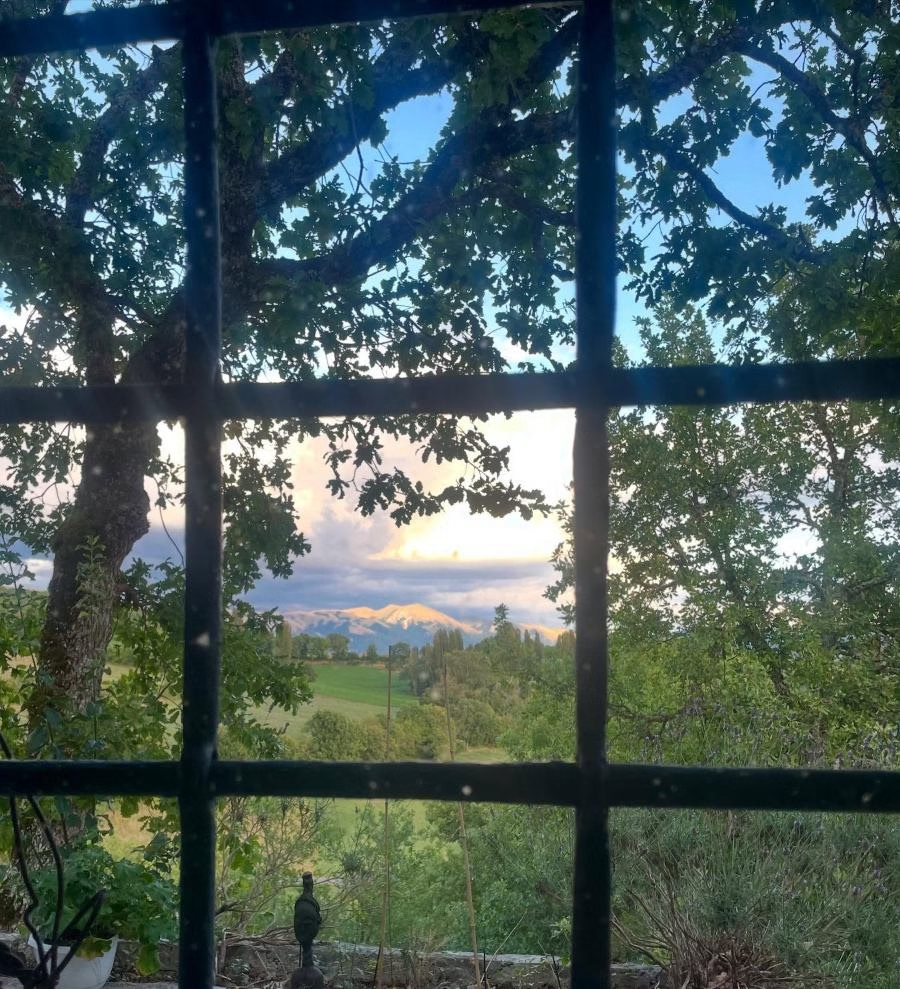
Sunrise view from the steps of San Flaviano, grief retreat Umbria Italy
Grief needs to be held, acknowledged, and allowed to be expressed. Many women have been holding it in — to protect others, or because there has been no space for it.
Here, you are free to feel what has been waiting — to be held, emotionally and physically.
San Flaviano has held people for centuries. It is a place where grief can be met without pressure or interruption.
“I had tried at least four counsellors in the UK — none of them helped. Sitting in a strange room with a stranger, pouring my heart out, didn’t let me relax. From the moment I spoke with Tess, I felt she totally understood what I was going through. Tess comforted me with hugs and understanding and a special kindness which I now miss. I cannot praise Tess and her team highly enough.”
Sue T, UK
If you are carrying grief — whether recent or long held, named or not yet named — a conversation is the right place to start.
Not a commitment. Just a call — to ask what you need, and to get a sense of whether this is the right fit.
Grief arrives in many forms.
Through death. Through leaving home, losing safety, or a future you once believed would come. Through life changing in ways you did not choose.
Many women arrive here broken-hearted, lost, and feeling very alone.
This grief retreat offers a place to meet what has been lost — without pressure to explain or resolve it.
Grief doesn’t always show itself clearly. Often it arrives quietly and settles in the body before there are words for it. Heaviness. Restlessness. A tiredness that doesn’t lift. A sense of being slightly out of step with the world.
Many women who arrive here aren’t sure whether what they’re carrying even counts as grief. As if there’s a line somewhere they were meant to cross. As if they should be coping better by now.
So grief waits. Unspoken. Unwitnessed. Still love, looking for somewhere to land.
When grief has nowhere to go
Some losses don’t allow space for mourning.
When life demands survival, responsibility, or strength, grief is often postponed. Not because it isn’t there — but because there has been no safe place for it to be felt. It settles quietly, waiting.
Here, space is made for what has had nowhere to go.
I came to understand this in a very personal way.
The night before I left my home in Senegal to travel to the UK for a summer project, I became unexpectedly upset. I was preparing to be away from my husband, my neighbours, my daily life — the people and rhythms that held me.
I had a small cry. Just a little boohoo. Just the body recognising separation.
But the response around me was immediate. I was gently told not to cry. Reassured. Moved inside. Asked to stop. My tears felt frightening to the people who loved me.
Sitting on the bed, I remember thinking very simply:
Where can I go to cry?
I ended up outside, alone, letting the grief move quietly through me — because there was no space for it where I was.
It was just grief needing a moment.
What grief revealed in my work
Years later, working with newly arrived Ukrainian women and children in the UK, I recognised the same pattern again and again.
They had fled war. They had survived. They were doing what anyone would do — keeping going.
Beneath that were losses carried quietly, and in many layers. Some visible. Some not. All deeply personal.
There was no space for grief. No shared language for sorrow. No place where mourning could be visible without fear.
The work I led grew from this understanding. We began not with talking, but with safety. With slowing down. With allowing grief to exist without explanation or urgency.
Over time, this work culminated in the creation of a grief garden — a memorial space where people could mourn together, openly, and in their own way. A place where grief could be witnessed rather than managed.
That experience shaped everything that followed.
Because grief does not need to be solved. It needs permission. It needs space. It needs to be held.

Grief, ritual, and praise
Ritual is how grief speaks when words are not enough.
It is not ceremony for its own sake.
It is how meaning is made when something precious has been lost.
How love is acknowledged.
A candle lit.
A name spoken.
A story told.
A moment of silence shared.
These simple acts tell the heart: this mattered.
This love existed.
In a world that rushes healing, ritual restores the lost art of mourning. It allows grief to be expressed rather than contained, honoured rather than hidden.
In this way, grief becomes a form of praise.
Not celebration — but reverence.
A quiet recognition of how deeply something was loved.

Interior of San Flaviano 15C Church, Umbria Italy
When grief and trauma are tangled
Some grief feels unfinished.
Not only sadness, but shock.
Fear that lingers.
The body still braced, even long after the loss.
For many people, grief is tangled with what happened before, during, or around the loss. The body remembers. Part of you may still feel back there — in the moment everything changed.
When trauma surrounds a loss, it can be hard to stay in the present long enough to grieve. The past keeps pulling attention back, as if the loss is still happening now.
This does not mean you are stuck.
It means something in you has been trying to protect.
A quiet grounding note
When grief feels overwhelming or frozen, it is often because the trauma surrounding the loss still feels alive. The body does not yet feel safe enough to mourn. Gentle, trauma-informed work helps create enough steadiness for grief to be felt — without being pulled back into the moment of loss.